Vancouver’s False Creek Energy Utility Wins IDEA System of the Year Award
Key Takeaways
- What happened
- The City of Vancouver’s False Creek Neighbourhood Energy Utility (NEU) has been awarded the System of the Year Award (SOYA) by the International District Energy Association (IDEA).
- Location
- IDEA2026 conference and trade show held in Ottawa, Ontario.
- Key points
-
- The recognition of the False Creek Neighbourhood Energy Utility highlights the growing…
- City of Vancouver's False Creek Neighbourhood Energy Utility awarded System of the Year Award…
- WHERE: IDEA2026 conference and trade show held in Ottawa, Ontario.
- Local impact
- The False Creek Neighbourhood Energy Utility is a City of Vancouver-owned and operated system. It was developed following a comprehensive study on low-carbon technology options approved by City Council. The utility specifically targets Southeast False Creek, parts of Mount Pleasant, and the False Creek Flats area. For Metro Vancouver buyers, sellers, developers and investors, watch financing cost, transaction pace, supply mix and policy expectations.
- Who should watch
- ["Properties in Southeast False Creek, Mount Pleasant, and the False Creek Flats connected to the NEU may have lower operational energy costs due to the utility's high efficiency and renewable energy mix.", 'The award validates the…



What Happened
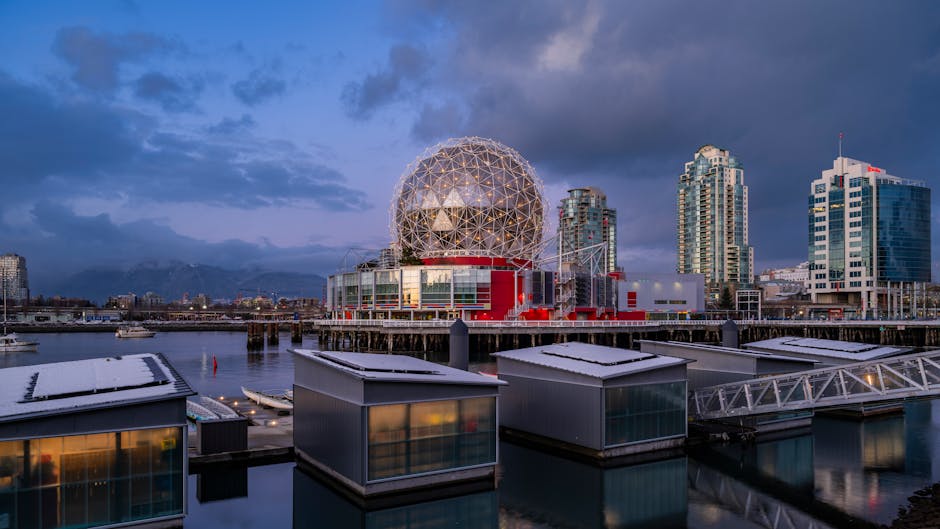
The City of Vancouver’s False Creek Neighbourhood Energy Utility (NEU) has been awarded the System of the Year Award (SOYA) by the International District Energy Association (IDEA). The award was announced during the IDEA2026 conference and trade show held in Ottawa, Ontario, between June 23 and 26, 2026. SOYA is recognized as the highest honour bestowed by the industry association.
The NEU, which supplies low-carbon thermal energy for space heating and hot water to buildings in Southeast False Creek, parts of Mount Pleasant, and the False Creek Flats area, demonstrated significant operational improvements in 2025. Its overall system efficiency rose from 103% in 2024 to 148% in 2025, while 73% of its delivered energy came from renewable sources. These metrics contributed to a reduction of 7,070 tons of CO₂ emissions compared to a 2007 baseline.
The utility is notable for being the first district energy centre in North America to utilize sewage heat as an energy resource. The International District Energy Association, a nonprofit industry association founded in 1909 and based in Massachusetts, represents nearly 3,000 members across more than 30 countries.
Why It Matters
The recognition of the False Creek Neighbourhood Energy Utility highlights the growing viability and efficiency of district energy systems in dense urban environments. By capturing waste thermal energy from sewage, the NEU provides a low-carbon alternative to traditional fossil-fuel-based heating for residential and commercial buildings. This reduces the carbon footprint of the neighborhoods it serves, including Southeast False Creek, Mount Pleasant, and the False Creek Flats.
The sharp increase in system efficiency to 148% in 2025 demonstrates that large-scale thermal energy networks can operate effectively while integrating renewable sources. For the City of Vancouver, this award validates the long-term investment in low-carbon infrastructure and offers a model for other municipalities looking to decarbonize building heating and hot water systems.
Local Vancouver / Burnaby Context
The False Creek Neighbourhood Energy Utility is a City of Vancouver-owned and operated system. It was developed following a comprehensive study on low-carbon technology options approved by City Council. The utility specifically targets Southeast False Creek, parts of Mount Pleasant, and the False Creek Flats area. Its unique technology involves capturing waste heat from sewage, a first for a district energy centre in North America.
While the award itself is an industry accolade, the underlying infrastructure impacts local housing and development dynamics. District energy systems like the NEU can influence building design, energy costs, and sustainability certifications for new developments in the area. The utility's ability to deliver 73% of its energy from renewable sources in 2025 aligns with broader municipal goals for reducing greenhouse gas emissions in the Greater Vancouver region.
Community
Questions, Answers & Comments
Ask a question, add context, or leave a comment. Public posts appear after review.
No public questions or comments yet. Be the first to ask.