Loblaws City Market Set to Open at South Granville SkyTrain Tower
Key Takeaways
- What happened
- Loblaws City Market South Granville is set to open in late June 2026.. The timing is also described as falling in the very first week of Summer 2026.
- Location
- 1461 West Broadway
- Key points
-
- For housing readers, the practical significance is not just the arrival of a grocery brand.
- Loblaws City Market South Granville opening
- Local impact
- For BurnabyHouse readers, the useful comparison is the pattern rather than the specific Vancouver address. For Metro Vancouver buyers, sellers, developers and investors, watch financing cost, transaction pace, supply mix and policy expectations.
- Who should watch
- - Buyers should treat the grocery opening as a convenience signal, not as proof of future price growth; the source provides no sales, rent, or appraisal data.
Generating audio…



What Happened
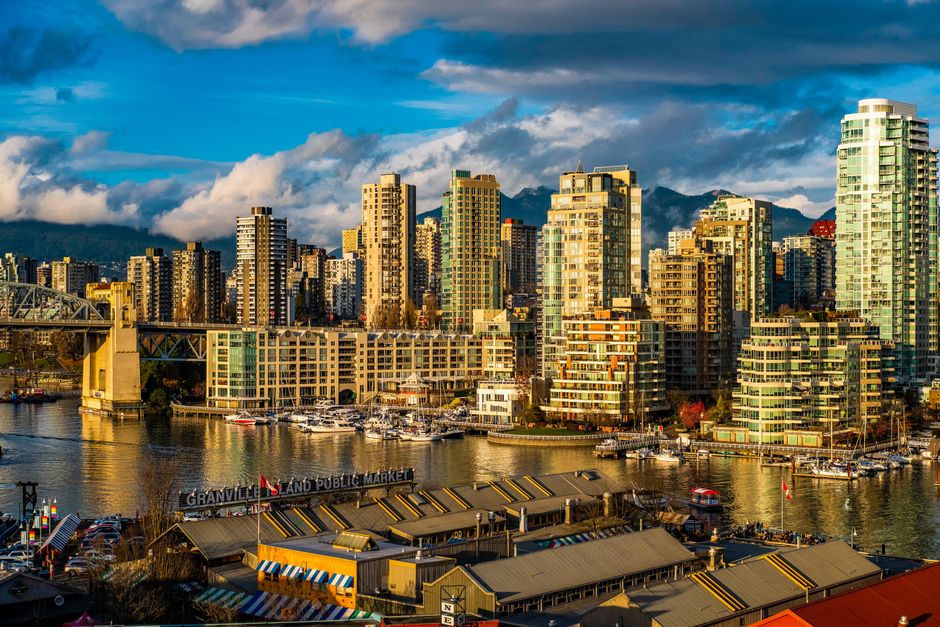
Loblaws City Market South Granville is set to open in late June 2026. The timing is also described as falling in the very first week of Summer 2026. The store is identified as a 22,000 sq. ft. grocery store. The planned location is 1461 West Broadway. The location is at the Granville Street and West Broadway intersection.
The site is within the South Granville retail village of Vancouver. The store will open at The Stories tower. The Stories tower is described as the site of SkyTrain's future South Granville Station. The key event disclosed is the opening of Loblaws City Market South Granville.
The source facts do not disclose the store's opening hours, staffing levels, lease terms, ownership structure, or construction cost. No money amounts, sales data, or broader retail-performance figures are disclosed. No published date for the original article is disclosed in the provided fact extraction.
Why It Matters
For housing readers, the practical significance is not just the arrival of a grocery brand. A 22,000 sq. ft. grocery store at a future SkyTrain station site can change how people evaluate nearby homes, especially if they prioritize walkable errands, transit access, and daily convenience. When food shopping, transit, and dense urban form are placed together, the local value proposition shifts from a purely residential question to a lifestyle-and-access question.
This matters for affordability and livability in a different way than a tax change or zoning vote. A grocery store does not directly create cheaper housing, and the source does not disclose any housing prices, rents, or sales figures. But daily-needs retail can make smaller urban homes more workable because residents may rely less on car storage, long shopping trips, or separate suburban-style retail access. That can affect buyer preferences even when it does not immediately show up as a measured price change.
The timing also matters because the location is tied to SkyTrain's future South Granville Station. The source does not disclose the station's service date, and it does not provide a broader transit construction timeline. Still, the pairing of a major grocery use with a future station site is the kind of mixed-use signal that buyers, renters, brokers, and developers tend to watch closely.
Local Vancouver / Burnaby Context
For BurnabyHouse readers, the useful comparison is the pattern rather than the specific Vancouver address. Burnaby and Vancouver buyers often compare homes through the same basic lens: how close is the home to rapid transit, and how much daily life can be handled without a separate trip by car? The South Granville opening gives a clear example of how a retail anchor can support the appeal of a transit-oriented location, even though the reported facts are specific to Vancouver.
Local buyers should separate two issues. The first is confirmed: Loblaws City Market South Granville is identified as opening at 1461 West Broadway in late June 2026, at The Stories tower and the future South Granville Station site. The second is interpretive: whether that kind of retail access will translate into stronger housing demand nearby. The source does not provide residential pricing, rental data, absorption numbers, or resale information, so any market conclusion has to be treated as local analysis rather than reported fact.
In BurnabyHouse local context, grocery access near transit tends to matter most for households choosing between convenience and space. A buyer who values daily walkability may treat a grocery store near a station as a meaningful amenity. A buyer who prioritizes larger floor area, parking, or quieter streets may see the same location differently. The opening therefore fits into a broader local housing conversation about trade-offs, not a simple conclusion that every property nearby benefits equally.
The most important caution is that a future-station retail node is not the same thing as a completed transit environment. The source identifies SkyTrain's future South Granville Station, but it does not disclose station opening details. Until the transit piece is fully operational, market expectations may run ahead of the lived experience of the area.
Market Impact
The most likely practical market effect is improved neighbourhood convenience around the specific intersection and tower site identified in the facts. For nearby owners and landlords, a large grocery use can make listings easier to explain because it gives a simple daily-life benefit: food shopping close to home and close to a future station site. For buyers and renters, it may reduce perceived friction in choosing a denser urban location.
That said, the source does not provide any evidence of price appreciation, rent increases, new sales volume, or leasing performance. The impact should therefore be viewed as qualitative. It may support confidence in the immediate retail environment, but it does not prove a measurable change in property values.
For the condo and apartment market, the key effect is likely on preference and liquidity rather than on automatic valuation. A home near daily retail can be more attractive to people who do not want every errand to require a vehicle. However, buyers still need to price in building quality, strata or operating costs where applicable, noise exposure, financing conditions, and the timing uncertainty around future transit service.
Investor / Buyer Takeaway
- Buyers should treat the grocery opening as a convenience signal, not as proof of future price growth; the source provides no sales, rent, or appraisal data.
- Investors should watch whether daily-needs retail and future transit access improve tenant appeal, while avoiding assumptions about guaranteed rent premiums.
- Sellers near the area may be able to market walkability and access more clearly, but should not overstate transit completion or unsupported timelines.
- End users should visit the immediate area and decide whether the trade-off between urban activity and convenience fits their lifestyle.
- Anyone underwriting a purchase should confirm details independently, including building-specific costs and any future transit timing not disclosed in the source.
Builder / Developer Perspective
For builders and developers, the opening reinforces the value of integrating meaningful retail into dense, transit-adjacent locations. A grocery tenant can make a tower site feel more complete because it gives the surrounding area an everyday use rather than relying only on destination retail or office traffic. This can help a project communicate livability to buyers, renters, lenders, and commercial tenants.
However, the disclosed facts do not include developer economics. There are no construction costs, lease rates, tenant-improvement figures, financing terms, pre-sale figures, or municipal approval details in the fact extraction. That means the builder takeaway is strategic rather than financial: daily-needs retail can strengthen a mixed-use story, but the source does not show whether the arrangement is profitable, subsidized, difficult to lease, or easy to replicate.
For future projects, the execution risk is that retail space must fit real operating requirements. A grocery store needs usable floor area, loading, access, and customer visibility. The source confirms the store size and location, but it does not disclose the design or servicing details that would let builders compare feasibility across other sites.
Risk Factors
- Timing risk: the opening is described as late June 2026 and the very first week of Summer 2026, but the provided facts do not disclose a more precise confirmed date.
- Transit-timing risk: the location is tied to SkyTrain's future South Granville Station, but the source facts do not disclose when that station will be in service.
- Market-assumption risk: no property sales, rent, land-value, or leasing-performance data is disclosed, so price impacts should not be assumed.
- Operations risk: opening hours, staffing, servicing, and day-to-day store operations are not disclosed in the source facts.
- Building-specific risk: buyers or investors still need separate due diligence on any individual property, including costs, rules, financing, and insurance where applicable.
BurnabyHouse Insight
The bigger lesson for local readers is that housing value is increasingly shaped by the everyday ecosystem around a property, not only by the unit itself. A grocery store at a future SkyTrain station site gives buyers a concrete reason to consider a dense urban location, but it does not remove the need for disciplined due diligence. For Burnaby and Vancouver households, the smartest approach is to treat amenities like this as one layer of value: useful for lifestyle, helpful for marketability, but not a substitute for checking price, building condition, financing, and the real timing of surrounding infrastructure.
Community
Questions, Answers & Comments
Ask a question, add context, or leave a comment. Public posts appear after review.
No public questions or comments yet. Be the first to ask.